
NUS study identifies potential ‘master switch’ in aggressive breast cancer
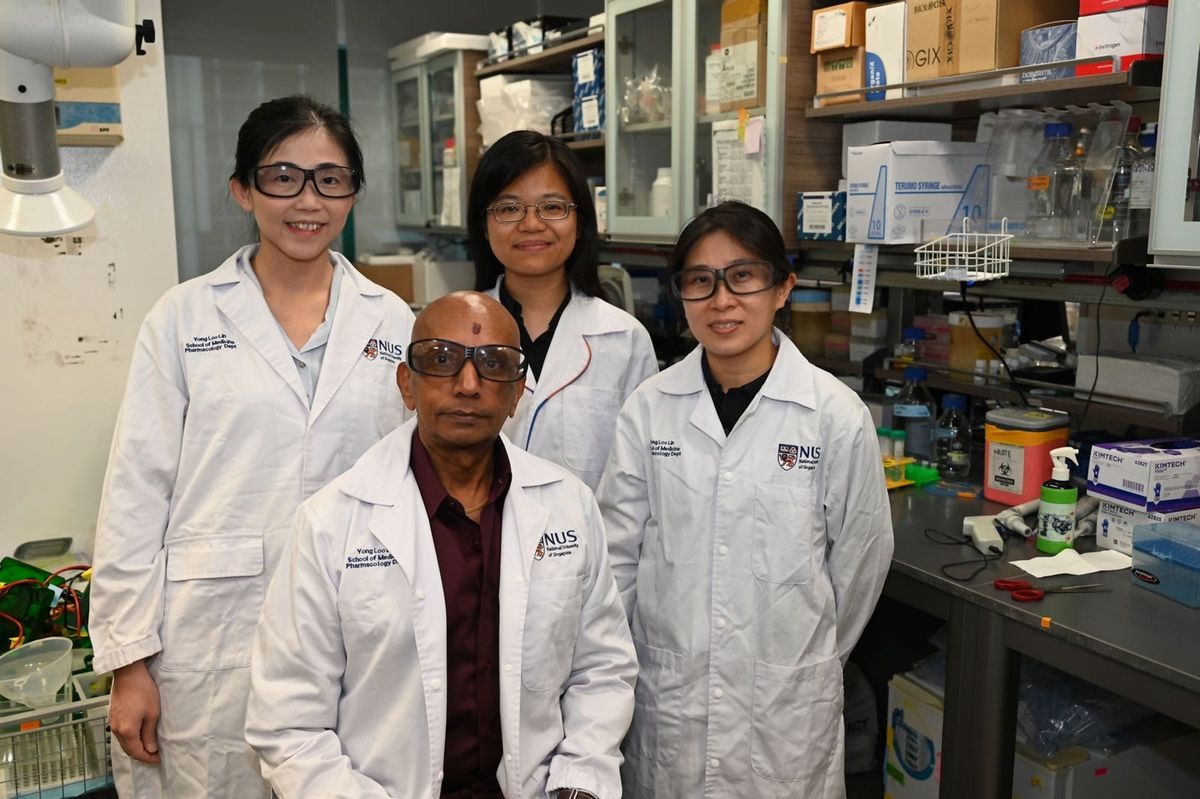
Experimental drug Supinoxin was found to suppress tumour growth and target treatment-resistant cancer stem cells in preclinical studies, opening a possible path towards more personalised therapy.
SINGAPORE: Researchers at the National University of Singapore have identified a potential way to disable a key molecular “master switch” that enables an aggressive form of breast cancer to grow, spread and resist treatment.
The discovery by a team from the Yong Loo Lin School of Medicine at NUS could eventually help doctors identify patients most likely to benefit from a more targeted and personalised treatment. The findings, however, are based on preclinical research, and further studies and clinical trials will be needed before the approach can be used in routine patient care.
The research focused on triple-negative breast cancer, an aggressive subtype that disproportionately affects women under 40 and accounts for about 15% to 20% of all breast cancer cases.
The disease derives its name from the absence of three receptors commonly found in breast cancer cells — those for oestrogen, progesterone and the HER2 protein. Since many existing cancer drugs work by targeting these receptors, their absence leaves patients with fewer treatment options.
Triple-negative breast cancer is also associated with a heightened risk of early recurrence and metastasis, the process by which cancer spreads from its original site to other parts of the body.
A particular challenge is posed by a small population of cancer stem cells that can survive treatment and subsequently drive tumour regrowth, recurrence and rapid spread.
Seeking to understand how these cells evade therapy, the NUS team examined regulators of the Wnt signalling pathway, which plays an important role in processes such as cell growth and movement.
The researchers identified a protein called DP103 as a master regulator of the pathway. According to the study, DP103 helps sustain a self-reinforcing cycle in which cancer cells continue to grow and spread, resist treatment and preserve the stem-cell population associated with recurrence.

The team then investigated whether Supinoxin, also known as RX-5902, could interrupt this cycle by blocking the effects of DP103.
The researchers analysed 21 samples, including tumour tissues from patients, laboratory-grown breast cancer cells and organoids derived from local cancer patients.
Treatment with the drug reduced the viability of cancer stem cells by 40% to 60%, while tumour growth in laboratory-grown models declined by approximately 50%. In other laboratory models, tumour size was reduced by about 90%, with healthy cells remaining largely unaffected.
The treatment also improved survival in the experimental models. Half of those receiving the drug survived for 70 days or longer, compared with none in the untreated group.
The findings have been published in the peer-reviewed journal Cell Death & Disease.
DP103 had previously been identified as a biomarker for triple-negative breast cancer by a team led by Assistant Professor Alan Prem Kumar of the NUS Centre for Cancer Research. Dr. Kumar, who is also with the Department of Pharmacology at NUS Medicine, was the principal investigator of the latest study.
Although RX-5902 is already being investigated as a possible treatment for breast cancer, the latest findings offer a way of identifying which patients may be most likely to respond to it.
“Our findings suggest that DP103 could potentially serve as a diagnostic biomarker to identify the patients most likely to benefit from RX-5902 treatment, paving the way for a more precise, personalised approach to treating triple-negative breast cancer,” Dr. Kumar said.
“Instead of treating all patients the same, future clinical trials could focus on those whose tumours have high levels of DP103, where the therapy is expected to have the greatest impact,” he added.
The study’s first author, Cai Wanpei, said RX-5902 prevented beta-catenin — a protein implicated in several cancers — from entering the nucleus of human cells. This effectively switched off genes that promote cancer growth and spread.
“This slows tumour progression and triggers apoptosis — the natural death of cancer cells,” said Ms. Cai, who was a PhD student at the NUS Centre for Cancer Research and the Department of Pharmacology during the study.
While the results point to a promising therapeutic strategy, their immediate significance lies in establishing DP103 as both a potential treatment target and a biomarker for selecting patients. Clinical trials will be required to determine whether the benefits observed in laboratory models can be safely reproduced in people.