
India Warns of Weakest Monsoon in 11 Years as El Niño Threatens Agriculture and Food Prices

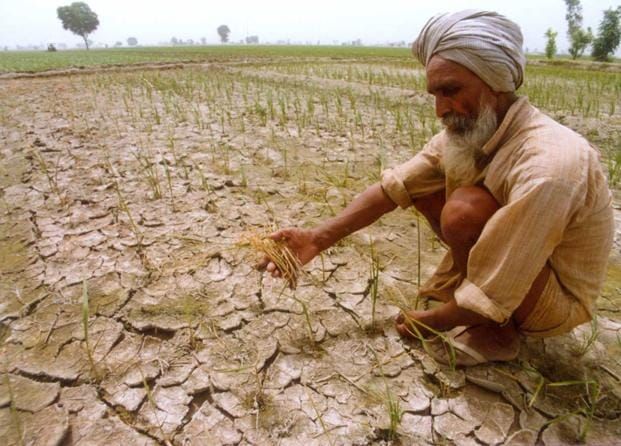
India's weather office has forecast that the 2026 southwest monsoon will deliver only 90% of the Long Period Average rainfall, marking the lowest rainfall in 11 years since 2015. The India Meteorological Department (IMD) officially classifies this as "below normal" rainfall, as anything under 96% of the Long Period Average falls into this category. This represents a downward revision from the earlier April forecast of 92% of the Long Period Average, signaling increasing concern about the monsoon's performance.
The forecast is driven by developing El Niño conditions in the Pacific Ocean, which historically weaken monsoon winds over India and shift rainfall patterns eastward. IMD Director General Dr. Mrutyunjay Mohapatra stated that June 2026 is likely to see below-normal rainfall across the entire country, with less than 92% of the Long Period Average. Central India, South India, and Northeast India are expected to receive below-normal rainfall, while Northwest India may see near-normal precipitation. The monsoon core zone, covering critical rainfed agricultural regions, faces particular risk with projected rainfall below 94% of the Long Period Average.
The agricultural implications are severe, as nearly 50% of India's agricultural land is rainfed and depends entirely on the southwest monsoon between June and September. Rain-fed crops including rice, pulses, and oilseeds could see significantly reduced output if the forecast materializes. This directly threatens food security and could drive food inflation higher, as deficient monsoons have historically fed into food price increases. Reservoir levels and rural demand could also strain if rainfall falls short, potentially impacting India's overall economic growth.
Secretary of the Ministry of Earth Sciences Dr. M. Ravichandran confirmed the official projection, stating that average monsoon rainfall during the June-to-September 2026 season is expected to be 90% of the Long Period Average, approximately 783 mm compared to the normal 87 cm. Above-normal maximum temperatures are also expected over much of India, compounding the stress on water resources and crops. This marks the first below-normal monsoon forecast in several years, reviving memories of past deficient seasons that severely strained water resources and triggered crop failures.
Independent forecaster Skymet Weather projects 94%±5% of the Long Period Average, also warning of erratic rainfall patterns in the season's second half. The Pacific has transitioned from 1.5 years of La Niña conditions to El Niño, which is expected to strengthen through fall 2026. Historically, India experiences below-average rainfall in most El Niño years, and past events have triggered severe droughts, crop failures, and grain export curbs. Monsoon performance remains a key driver of India's inflation dynamics and economic growth as Asia's third-largest economy, making this forecast a critical concern for policymakers.