Across the waters of Jurong Lake, Singapore celebrates Kerala’s Vallam Kali spirit
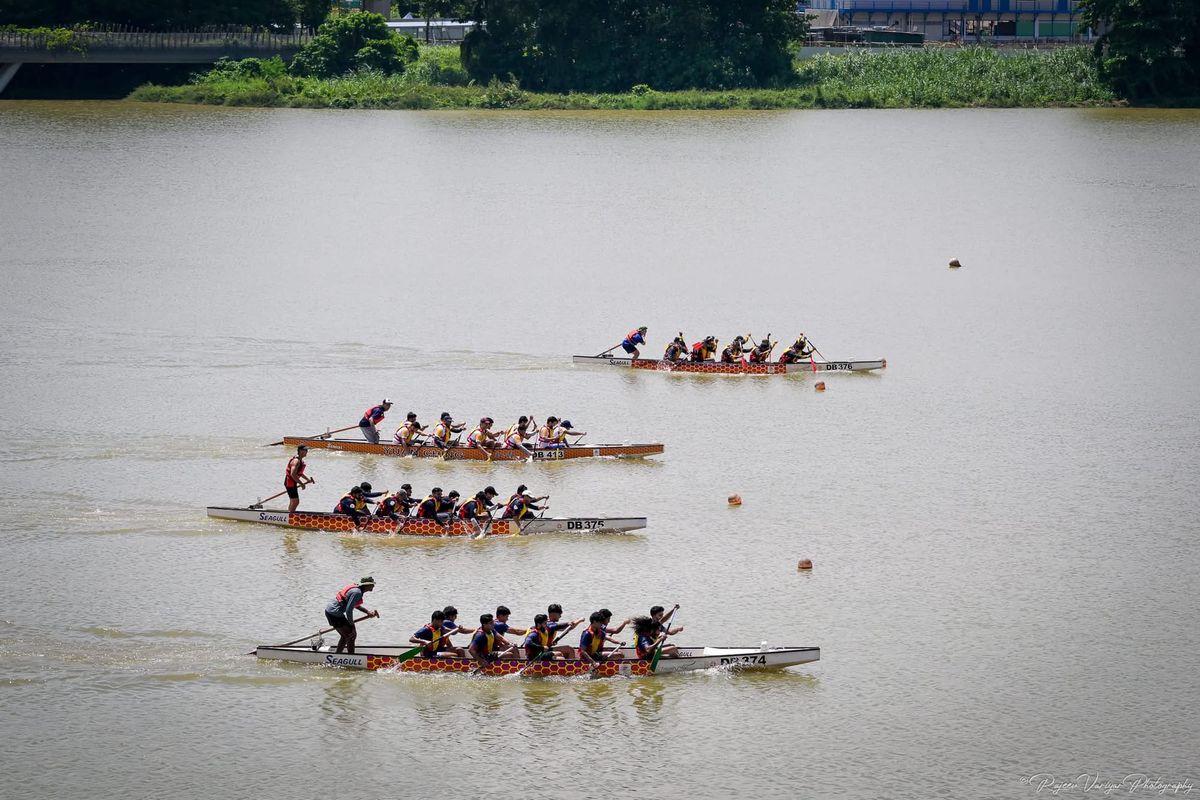
Singapore: Long before floral carpets are laid and the traditional Onasadya is served, the rhythmic beat of chenda resonated across Jurong Lake Gardens on Sunday as paddles sliced through the water in perfect synchrony. In a celebration that brought a slice of Kerala to Singapore, the Singapore Kairalee Kala Nilayam opened its month-long Kairalee Kampong Onam 2026 festivities with a Vallam Kali-inspired dragon boat race, recreating the excitement and camaraderie of Kerala’s iconic water festival on the waters of Jurong Lake
Drawing an audience of more than 600 people, the historic event transformed Jurong Lake into a vibrant cultural arena where Malayalees, Singaporeans and residents from diverse backgrounds came together to celebrate the spirit of Onam. While Kerala’s iconic Vallam Kali is traditionally contested in long snake boats, the Singapore edition adapted the festival using dragon boats, creating a local interpretation that preserved the essence of one of Kerala’s most celebrated traditions.
The race was not merely a sporting spectacle. It reflected the evolving identity of Singapore’s Malayalee community, which has continued to preserve its cultural heritage while embracing the city’s multicultural character. Organisers said the event was designed to encourage participation beyond the Malayalee community, making Onam a shared cultural experience rather than one confined by geography or ethnicity.
Founded nearly seven decades ago, Singapore Kairalee Kala Nilayam is among the oldest Malayalee cultural organisations outside India. With an estimated 40,000 Malayalees living in Singapore, the organisation has increasingly focused on presenting Kerala’s traditions in ways that remain meaningful for younger generations growing up away from their ancestral homeland.
“Our celebrations are intended to be inclusive,” said A.B.S. Manoj, Honorary General Secretary of Singapore Kairalee Kala Nilayam. “Rather than preserving culture as something from the past, we believe it should remain a living experience that people of all generations and backgrounds can actively participate in.”
President Rajith Mohan said the festival reflects the organisation’s commitment to strengthening community bonds through Kerala’s cultural traditions.
“Onam has always symbolised togetherness and harmony. Through initiatives such as Vallam Kali, we hope to create opportunities for people from different communities to come together, celebrate and better understand one another,” he said.
Vice-President Rita Nanu said the broader vision of Kairalee Kampong Onam was to ensure that children, youth and families experience Kerala’s traditions not simply as memories inherited from previous generations, but as living cultural experiences that they can enjoy and carry forward together.
The afternoon’s competition featured 11 teams—seven in the men’s category and four in the women’s category—competing in a series of closely contested races that drew loud cheers from spectators lining the waterfront.
The men’s teams included Noah’s Ark, Mallans, Kairalee Chundan, Chekavars, Focus Malayalam Chundan, Parco Family and Team Kulukki, while the women’s competition featured Minnal Vallam Kali Team, Kairalee Singappen, NBKL Veeranganamar and SMA Jalaranimar.
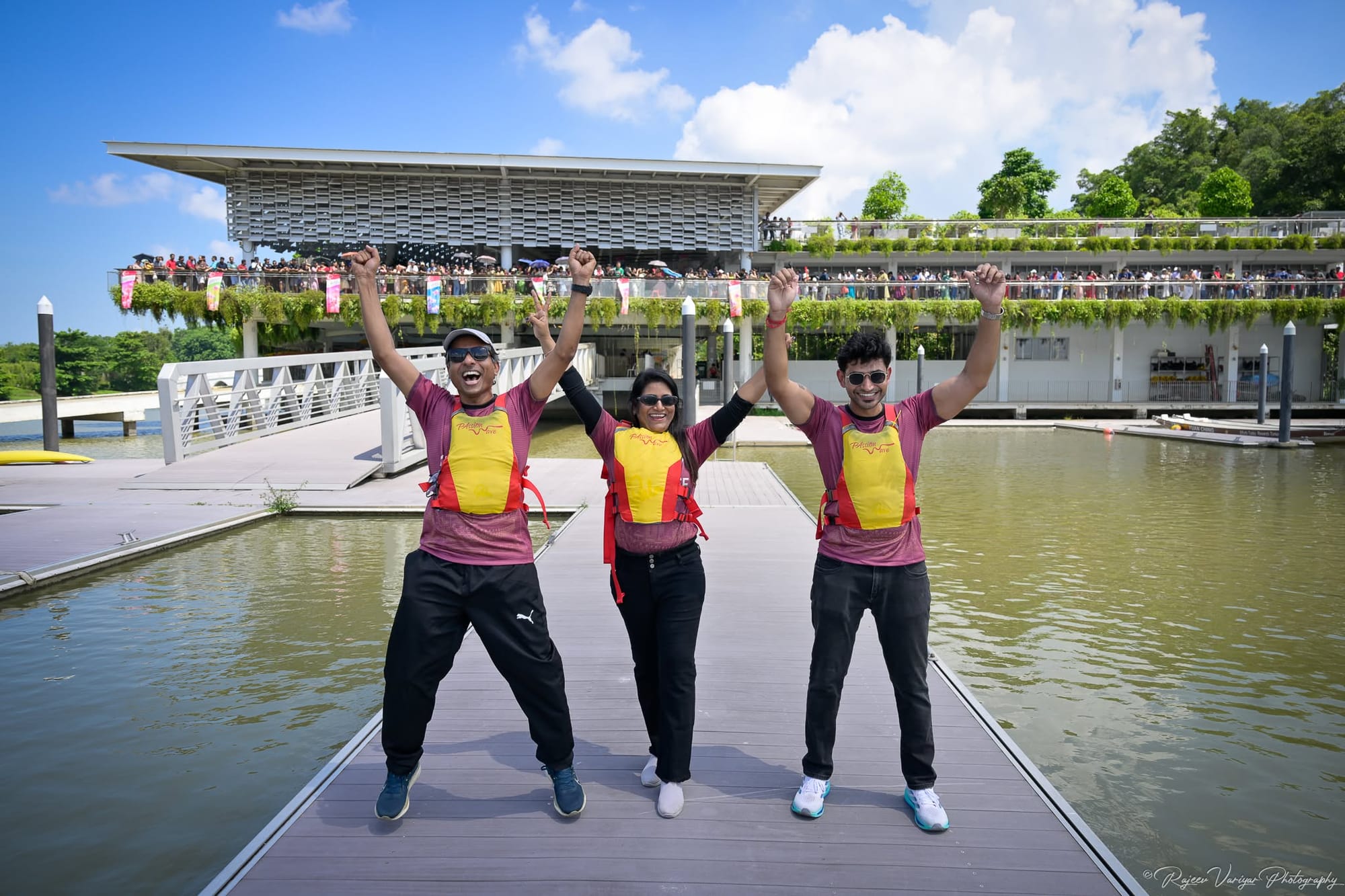
In the men’s championship, Team Kulukki (SMA) emerged victorious, with Chekavars finishing second and Focus Malayalam Chundan securing third place. In the women’s category, Minnal Vallam Kali Team claimed the title ahead of NBKL Veeranganamar, while Kairalee Singappen finished third.
Beyond the competition, the venue recreated the ambience of an Onam village festival. The unmistakable rhythms of Chenda Melam welcomed visitors, while food stalls served Kerala favourites including pazham pori, vada, sugiyan and tea. The beverage counter drew steady crowds with the ever-popular Kulukki Sarbath and the newly branded traditional drink Mangalasseri, offering a refreshing taste of Kerala that complemented the festive atmosphere.
Adding to the festive atmosphere was commentator Sreekanth, whose energetic narration blended Vallam Kali traditions with references from international football, drawing laughter and applause from spectators throughout the afternoon. During breaks between races, DJVibezzz kept the energy alive with an upbeat musical mix that had participants and visitors dancing despite the tropical heat.
The successful staging of the inaugural Vallam Kali reflected months of careful planning by a large team of volunteers led by Nima Manaf, Organising Chairman of Kairalee Kampong Onam 2026. Supported by Shanish, Vishnu, Balaji, Rita Nanu and numerous volunteers, the organising team coordinated race operations, team management, venue logistics, sponsorships and on-ground arrangements, transforming Jurong Lake into a colourful celebration of Kerala’s culture. Their collective efforts ensured the event unfolded seamlessly, allowing the festive spirit to take centre stage.
The inaugural Vallam Kali marks the opening of Kairalee Kampong Onam 2026, a month-long celebration that will culminate on August 15 at the Sembawang Recreation Centre. The festival will feature Pookkalam (floral carpets), traditional music and dance, village games, cultural exhibitions and a range of interactive experiences that recreate the charm of a traditional Kerala village. Designed around community participation rather than passive spectatorship, the celebrations invite families and people from all backgrounds to experience the warmth and spirit of Onam together.
As the final race concluded and the echoes of the chenda faded across Jurong Lake, it became evident that the day’s significance extended beyond sporting honours. Though contested in dragon boats instead of Kerala’s iconic snake boats, the inaugural Vallam Kali faithfully captured the rhythm, camaraderie and collective spirit that define the festival. In doing so, it demonstrated how traditions can be meaningfully reimagined across borders, ensuring that Kerala’s cultural heritage continues to flourish in the heart of multicultural Singapore.